If you manufacture food or beverage products, you know how critical your labels are to every aspect of the sale: consumer trust, brand reputation, regulatory compliance, and everything in between. You also know that application errors are fairly common, and fairly annoying.
This article covers eight common technical issues food and beverage manufacturers face when applying labels – and tips on how to work with your label manufacturer to choose the right materials and techniques to put a stop to the label-line slowdowns.
8 Common Label Application Issues: Causes & Solutions
Why won’t my labels stick to my product?
Adhesion failure is often rooted in environmental factors like condensation on cold or frozen packaging, or contaminated surfaces such as oily, powdery residue. If the label material is incompatible with the packaging substrate, the bond will inevitably fail.
Root causes:
- Condensation on cold or frozen packaging
- Oily, powdery, or contaminated surfaces
- Low-quality adhesive or incompatible label material
Impact: Labels peel off during distribution, fail retail checks, or cause barcode scan failures. Consumers and retailers lose trust and brand affinity.
Solution: A professional label manufacturer can conduct a surface energy analysis to recommend the correct high-tack, moisture-resistant adhesive tailored to your specific application environment, ensuring the label remains intact until it’s in your customer’s hands.
Different packaging requires different label materials:
| Packaging Type | Recommended Label Material |
| Poly bags | BOPP film + freezer adhesive |
| Cardboard | Paper or BOPP |
| Vacuum-sealed films | High-tack acrylic adhesive |
| Rigid plastic | All-temp or freezer-grade acrylic |
Why are my product labels wrinkling, bubbling, or slivering?
These visual defects stem from uneven surfaces—such as curved PET bottles or flexible pouches—combined with incorrect wipe-down pressure. When air becomes trapped, the aesthetic appeal vanishes, and barcode scannability suffers.
Root causes:
- Uneven surfaces (e.g., rigid PET bottles, flexible pouches)
- Incorrect wipe-down pressure
- Air trapped due to curved surfaces
- Temperature fluctuations
Impact: Reduced shelf appeal, scannability issues, and customer perception problems.
Solution: Expert label manufacturers solve this issue by optimizing label stocks for conformability. They can help advise your team on adjusting application machinery to provide uniform pressure across all surface contours.
Why are my labels crooked, misaligned, or skewed?
Skewed labels indicate inconsistencies in product handling, misadjusted applicator heads, or worn drive rollers. This creates a significant problem for retail compliance and brand perception.
Root causes:
- Inconsistent product handling or spacing
- Misadjusted applicator heads
- Variations in container size or shape
- Wear on drive rollers or belts
Impact: Non-compliance with branding or regulatory requirements; rework and scrap.
Solution: Your label manufacturing partner should prevent misprints on their side through complete machine maintenance and QA processes. Once in your facility, integrating precision guidance rails and performing routine equipment maintenance with your label supplier’s guidance, you’ll ensure every label hits its mark consistently.
Why are some of my products missing labels, or double labeled?
Sensor misreads are the primary culprit, often caused by poor contrast or translucent materials that confuse automated systems. Missing labels lead to traceability failures and potential recalls.
Root causes:
- Sensor misreads (poor contrast, translucent labels, faulty sensors)
- Product jams or inconsistent feed
- Label roll tension problems
Impact: Retail rejection, traceability failures, potential recalls.
Solution: Collaborating with your label supplier to design labels with appropriate eye-marks or upgrading to advanced optical sensors on the application machine allows for perfect synchronization between the supply chain feed and the label application.
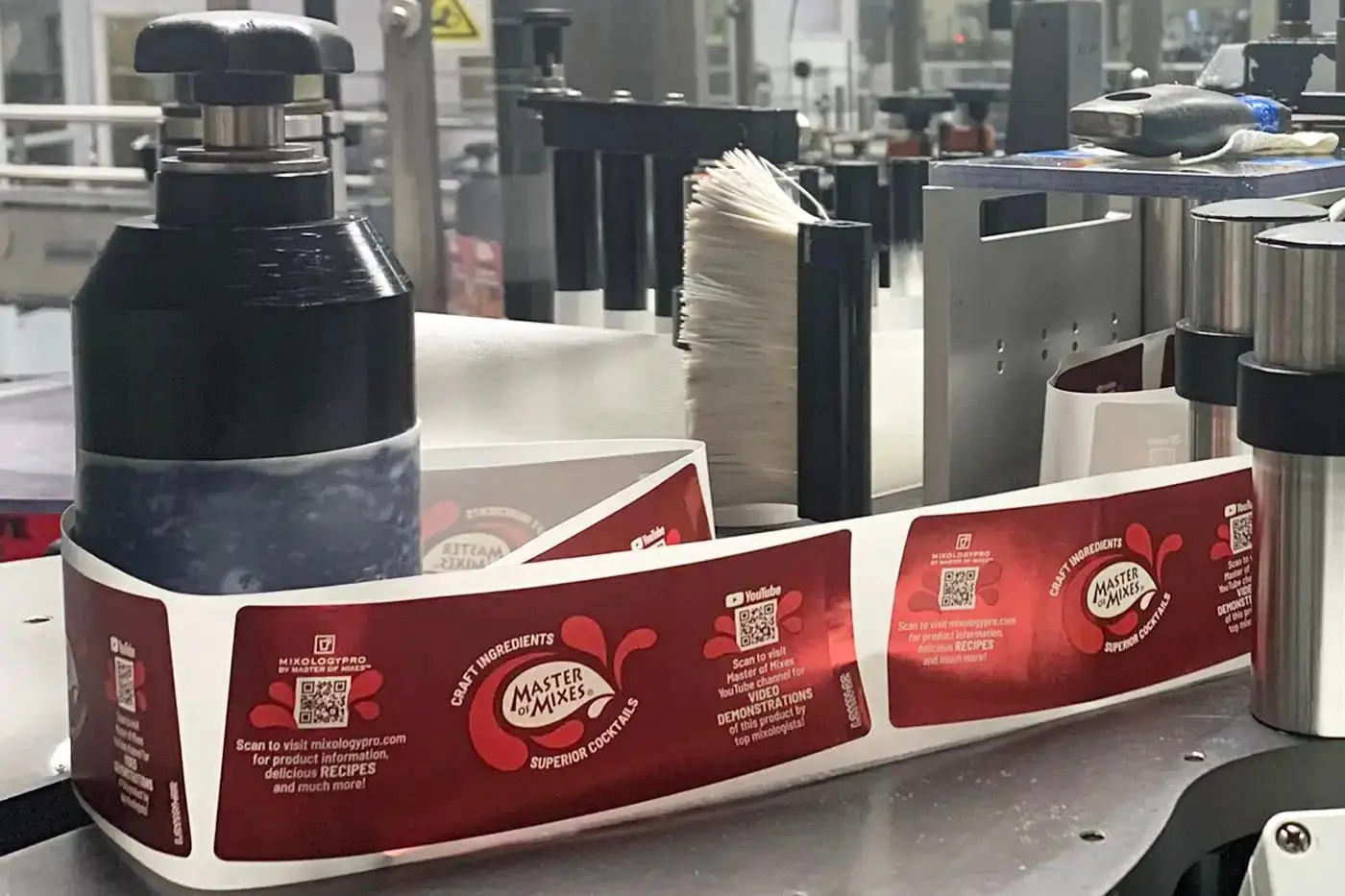
Why are my product label rolls breaking or jamming?
Frequent web breaks usually point to out-of-spec die cuts or uneven tension within the roll. If the liner thickness varies, the machinery will struggle to maintain rhythm.
Root causes:
- Out-of-spec die cuts
- Poorly wound rolls
- Variation in liner thickness
Impact: Web breaks, jams, and downtime.
Solution: Your label manufacturer should be printing labels that match the exact specs you supply for your unique products and application line. The right label manufacturer will recommend specialized, durable materials and protective over-laminates and finishes designed to withstand the specific, even harsh, conditions of your manufacturing floor.
Professional label providers implement strict quality control on roll winding and liner consistency, preventing expensive downtime and ensuring a smooth, continuous workflow on your production line.
Is my packaging environment impacting my labels?
Facilities dealing with high humidity, extreme refrigeration, or washdown procedures face unique challenges. Standard labels quickly fail under these stressors, leading to corrosion or peeling.
Root causes common in food and beverage facilities:
- High humidity
- Refrigeration/freezer areas causing condensation
- Dust and particulates (bakeries, dry goods)
- Washdown environments
Impact: Adhesive failure, equipment corrosion, inconsistent labeling.
Solution: Work with your label manufacturing partner to choose the right labels and adhesives for your specific environment and the packaging type you use.
Different packaging requires different label materials.
| Packaging Type | Recommended Label Material |
| Poly bags | BOPP film + freezer adhesive |
| Cardboard | Paper or BOPP |
| Vacuum-sealed films | High-tack acrylic adhesive |
| Rigid plastic | All-temp or freezer-grade acrylic |
Plus, in cold or humid environments, follow these best practices for application:
- Apply labels before freezing whenever possible. Adhesives bond better at warmer temperatures.
- Keep surfaces dry. A quick wipe can drastically improve adhesion.
- Use pressure. Firm, even pressure activates the adhesive.
- Avoid applying to frosted surfaces. Frost = adhesive failure.
- Allow “dwell time.” Let the adhesive set before freezing (ideally 4–24 hours).
Why are my product labels so staticky?
Dry environments often cause plastic containers to generate charges, causing labels to cling or misapply at high speeds. This is a common bottleneck in high-volume production.
Root causes:
- Dry environments
- Plastic containers generating charge
Impact: Labels cling or misapply, especially on high-speed lines.
Solution: Choosing the right label material and adding speciality finishes with your label manufacturer can help you get ahead of this issue before it starts.
Using anti-static label coatings provides an immediate response to this disruption, allowing your lines to run at peak capacity without the frustration of misapplied labels.
What if my labels have regulatory errors?
The most dangerous errors involve incorrect ingredients, missing allergens, or faulty nutrition facts. These issues often arise from poor version control and manual data entry errors.
Root causes:
- Label artwork version control issues
- Manual data entry errors
Impact: Major compliance risk and expensive recalls.
Solution: The best solution is to digitize your artwork management systems. A trusted label manufacturing partner will provide robust proofreading protocols and verification steps, ensuring that the details on your labels, from sugar levels to the presence of any food allergens, remain 100% compliant with current regulatory standards.
The Cost of Common, Preventable Label Application Issues
When a product reaches the retail shelf with missing information or a crooked, peeling label, the ripple effect includes everything from brand damage to potential regulatory investigations. These incidents force companies to divert time and resources toward damage control rather than growth. By addressing the root causes of label application errors, rather than just reacting to the symptoms, you can minimize waste and protect your brand’s integrity.
About Epsen Hillmer Graphics
Epsen Hillmer Graphics Company, or just Epsen Hillmer, has been printing high-quality, custom labels for businesses across the country since 1908.
As the second-longest continuously operating label manufacturer in the Midwest, Epsen Hillmer has been a true business partner to product manufacturers of all sizes for nearly 120 years. We remain family-owned and operated, and we serve businesses in the food, beverage, beer, wine, spirits, health, beauty, supplements, household product, chemical, automotive, and paint industries. From traditional paper labels to the latest sustainable and color label printing solutions, we have all commonly used finishes and films in stock.
If you need it labeled, we can print what you need to sell more units and grow your brand. Explore our answers to frequently asked questions here.